Choosing frog lures for Kerala snakehead fishing
A frog lure is a useful choice when snakehead can reach a surface presentation around freshwater vegetation. Start with the water you can fish: reachable weed edges, small openings and a safe landing place. A brand name alone does not tell you whether a lure suits that spot.
Compare the hook arrangement, body shape, weight and intended action. Weedless means weed-resistant, not snag-proof. A lure that works through scattered weed may still collect stems in a dense mat. Test its action close to the bank before committing to a long cast.
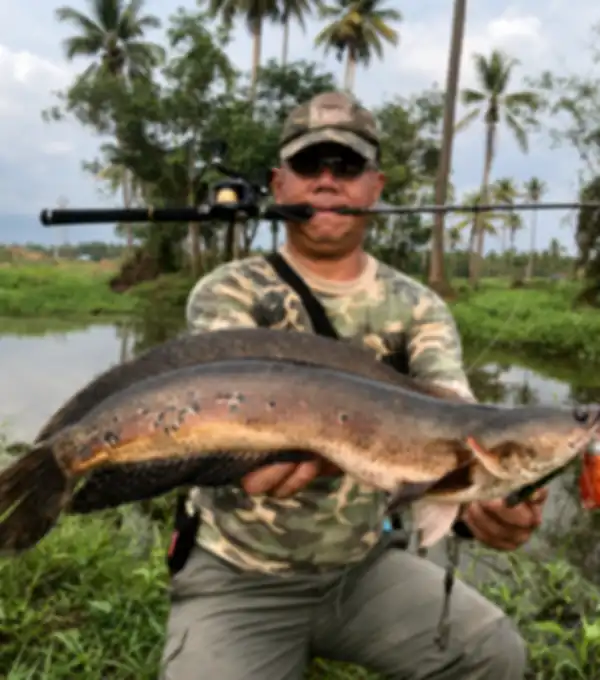

Match the frog to your water
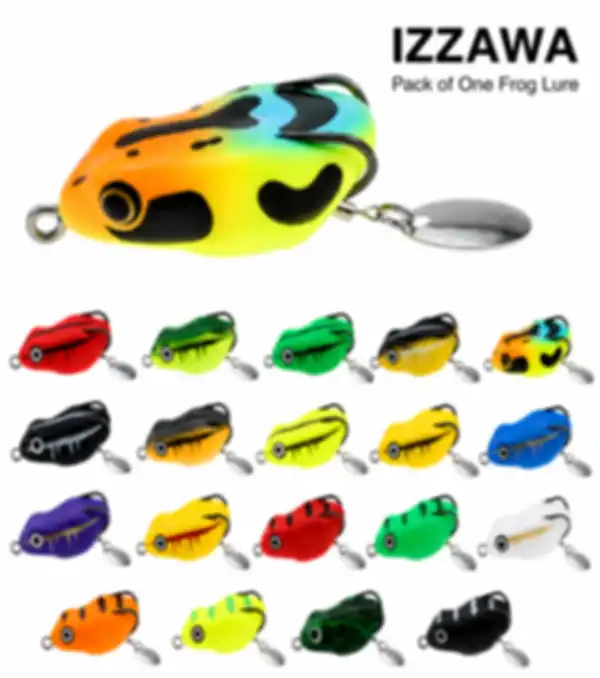
Around surface weed, compare frogs with protected hook points and enough room for the body to compress. In clearer lanes, choose an action you can control with short movements and pauses. Some frogs walk; others pop or swim. Check the exact model rather than assuming every soft frog behaves alike.
Choose a size and weight within your rod’s casting range. A heavier frog is not automatically better, and the largest body is not always easiest to hook. Check the selected variant, dimensions and pack quantity on the product page before buying.
Colour matters after presentation
Keep your first comparison simple. Begin with a colour you can track and work one reachable edge consistently. If fish follow but do not take, change one variable: pause length, speed, route or then colour. Repeatedly changing colours can hide a problem with the retrieve.
Inspect the lure after each cast through vegetation. Remove weed from the hooks and check that a hollow body has not filled with water. A frog sitting unusually low or dragging sideways needs attention before another cast. Compare available models in our frog lure collection.
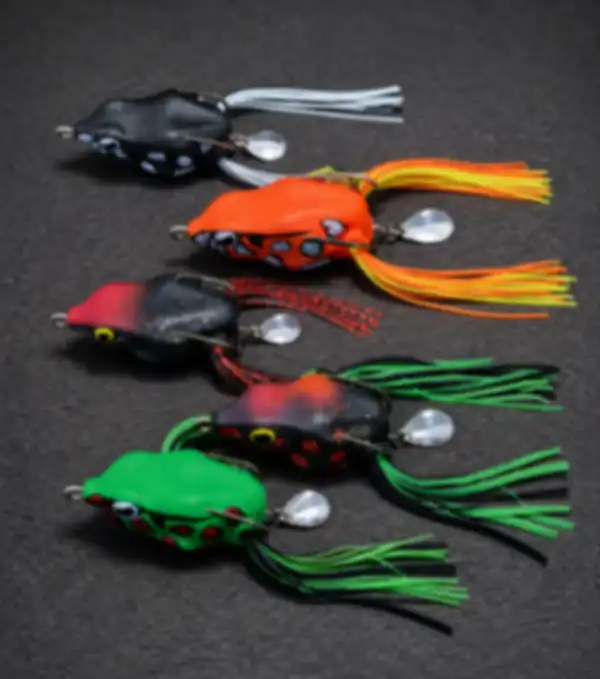
Build a balanced frog-fishing setup
Match rod, reel, line and lure as a complete outfit. The rod must cast the lure within its rated range and provide suitable control for the hook design and cover. Casting compatibility alone does not prove that an outfit can work effectively in thick vegetation.
Braid offers low stretch, but diameter, knots and abrasion still matter. Whether to use a leader depends on your presentation and the structure. Test how the complete connection affects the frog. Follow the tackle manufacturer’s recommendations and do not treat a line rating as a safe lifting weight.
Retrieve, missed strikes and safe access
Make a short cast first, watch the action, then work a weed edge with controlled movements and pauses. A splash does not always mean the fish has taken the lure. Regain contact and establish that the fish has it before setting the hook in a way suited to the lure and tackle.
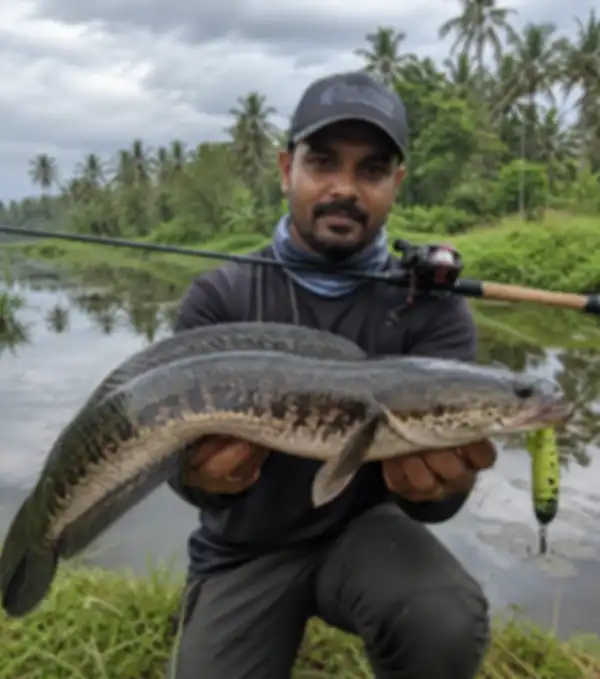
If the same area produces a follow, note the route and repeat the useful part of the presentation. There is no fixed pause length or colour that guarantees a catch. Choose accessible freshwater banks, obtain permission where needed and avoid slippery bunds, fast floodwater and nesting or fry-guarding fish.
Before you buy: a short checklist
Check the lure’s dimensions, weight, hook style, selected colour and pack quantity. Confirm that it suits your rod and the cover you intend to fish. Keep a small selection with different useful actions rather than buying several sizes you cannot cast comfortably.
Frequently asked: Is a frog always best for varal? No. If suitable surface water produces no response, consider an appropriate subsurface presentation. Is a weedless frog snag-proof? No. Route and tackle control still matter.
Fishing Store India ships across India, with free shipping above ₹999. Check final charges and available payment options at checkout. Returns are limited to wrong or damaged items reported within 2 days, subject to eligibility; a continuous unboxing video is mandatory. Read our policy before ordering.